
Pedestrian wind comfort describes whether wind conditions in open spaces suit the activities people carry out there. The same wind speed may be acceptable for someone on the move yet uncomfortable for people sitting at an outdoor café, waiting at a building entrance or using a children’s play area. The assessment therefore rests not simply on the question “is it windy?” but on how often certain speeds are exceeded and what the space is intended for. Building entrances, terraces, restaurant seating, squares, footpaths and transit waiting points should each have their own comfort targets.
In the Lawson 2001 approach, spaces are broadly divided into use categories such as long-term sitting, short-term sitting or standing, strolling and business walking. In common practice, classification is based on equivalent wind speed thresholds of roughly 4, 6, 8 and 10 m/s being exceeded for a given proportion of the year; however, the speed definition and thresholds used should be stated together with the Lawson variant accepted by the relevant authority or project specification. The outcome of the analysis is not just a comfort class for each space but an assessment of its suitability for the planned use. An area rated “suitable for walking”, for example, may still fail as restaurant seating.
Related insights
See all
What Is Wind Load?
The pressures and suctions wind creates on building surfaces, and the difference between main structural loads and local façade pressures.

Wind Load Calculation to ASCE 7 and EN 1991-1-4
Code-based wind load calculation: the MWFRS and C&C distinction, EN 1991-1-4 parameters, and where code coefficients fall short.
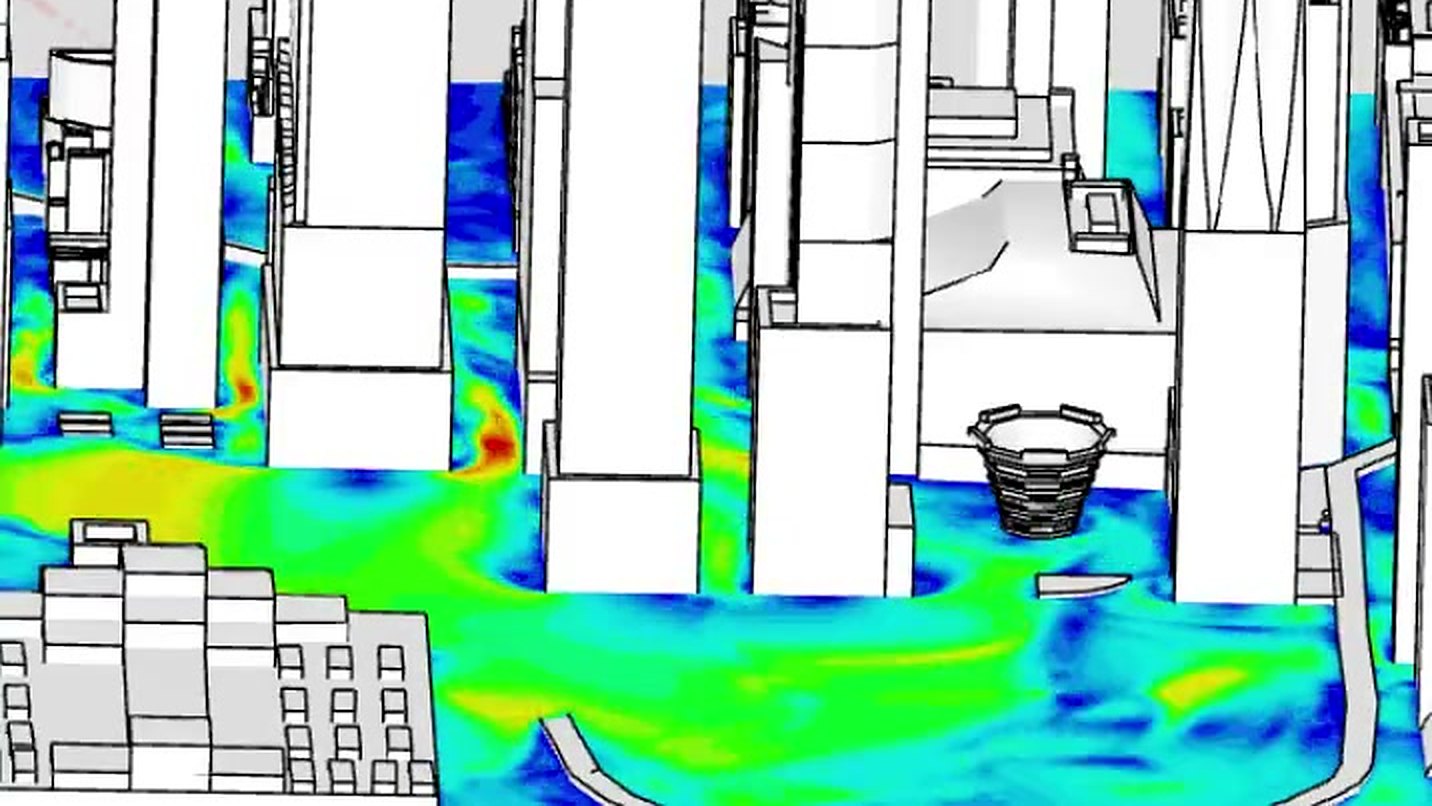
When Should CFD Wind Analysis Be Used?
Where CFD outperforms code tables, how it supports pedestrian comfort studies, and what determines whether its results can be trusted.