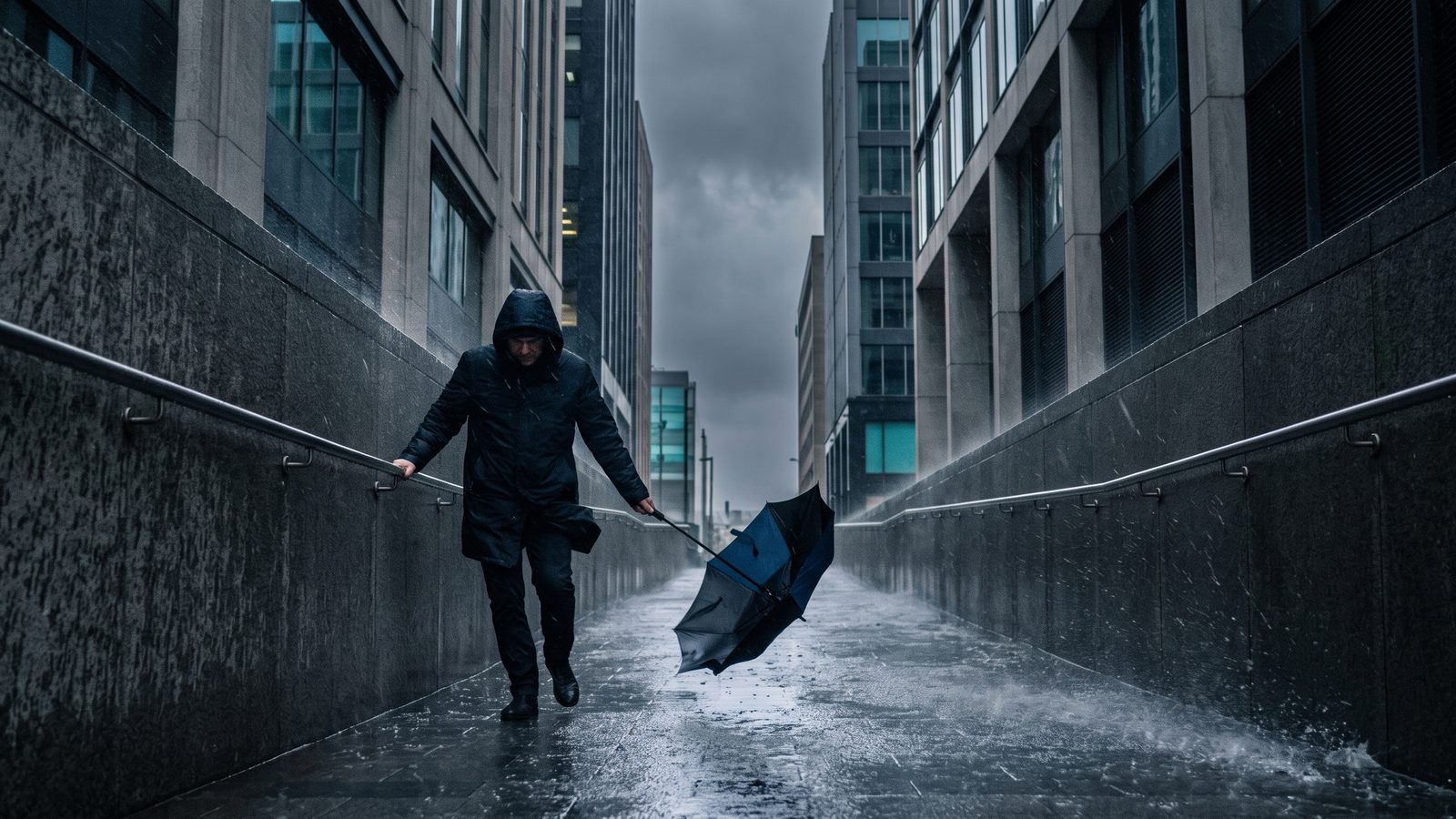
Pedestrian wind safety is the assessment of rare but high wind speeds that can unbalance a person or cause a fall. Whereas comfort criteria measure the everyday usability of a space, safety criteria examine the risk posed by higher speeds combined with their low frequency of occurrence. Strong winds can concentrate at building corners, in downwash zones in front of tall towers, in narrow passages, at podium edges and along open link corridors. Elderly people, children and people with limited mobility can be more affected by these conditions.
Under Lawson 2001, safety is checked by pairing high equivalent wind speeds with a very low annual probability of exceedance. In practice, different limits may be defined for the general public and for more vulnerable user groups; speeds in the order of 15–20 m/s, for example, may be assessed against an annual exceedance probability of around 0.022%, depending on the Lawson variant used. For this reason it is not enough for a report simply to state that “Lawson 2001 was used”; the speed definition, threshold, exceedance probability and vulnerable-user assumption must be stated explicitly. An area that fails on comfort can be improved through landscaping or canopies, whereas an area that fails on safety calls directly for design intervention.
Related insights
See all
What Is Wind Load?
The pressures and suctions wind creates on building surfaces, and the difference between main structural loads and local façade pressures.

Wind Load Calculation to ASCE 7 and EN 1991-1-4
Code-based wind load calculation: the MWFRS and C&C distinction, EN 1991-1-4 parameters, and where code coefficients fall short.
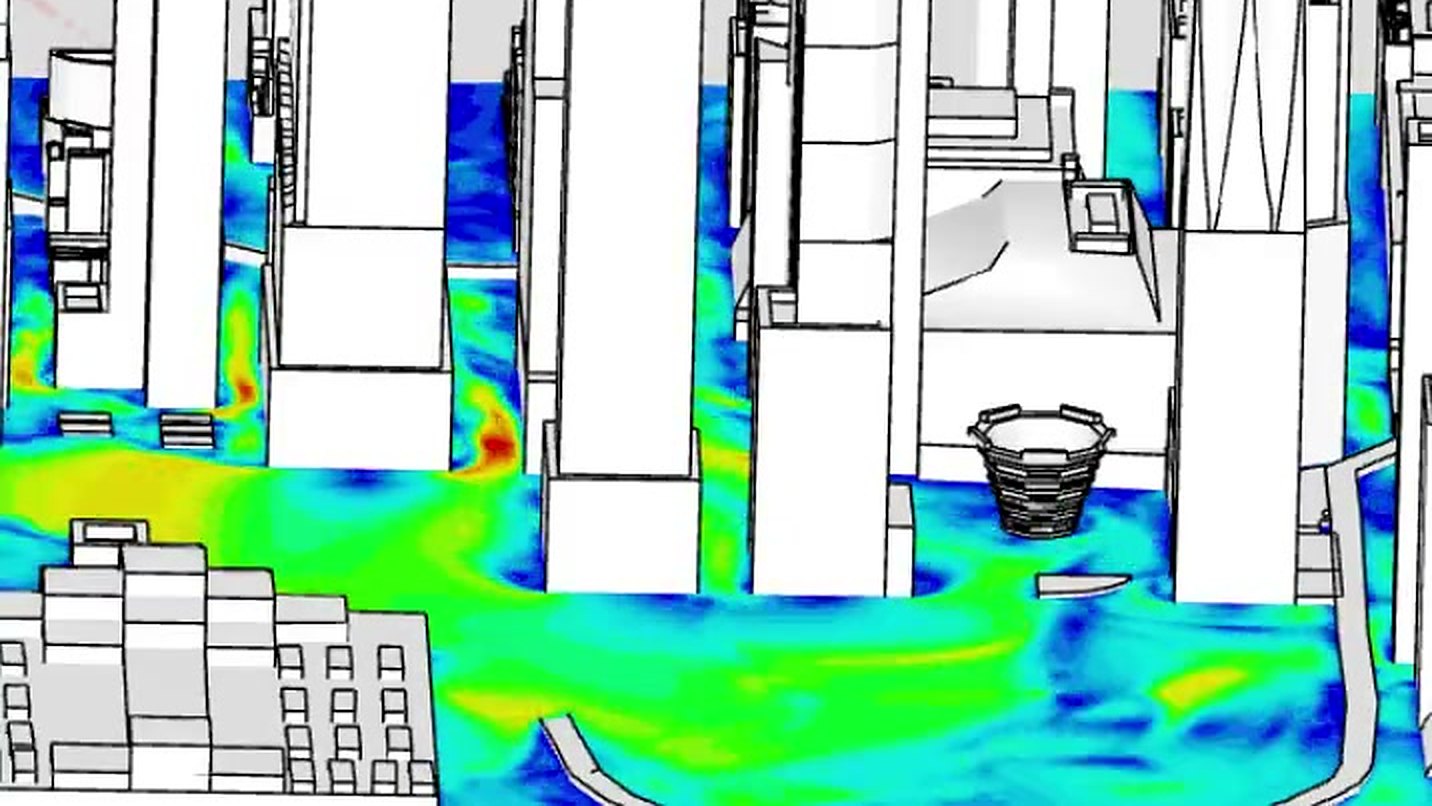
When Should CFD Wind Analysis Be Used?
Where CFD outperforms code tables, how it supports pedestrian comfort studies, and what determines whether its results can be trusted.