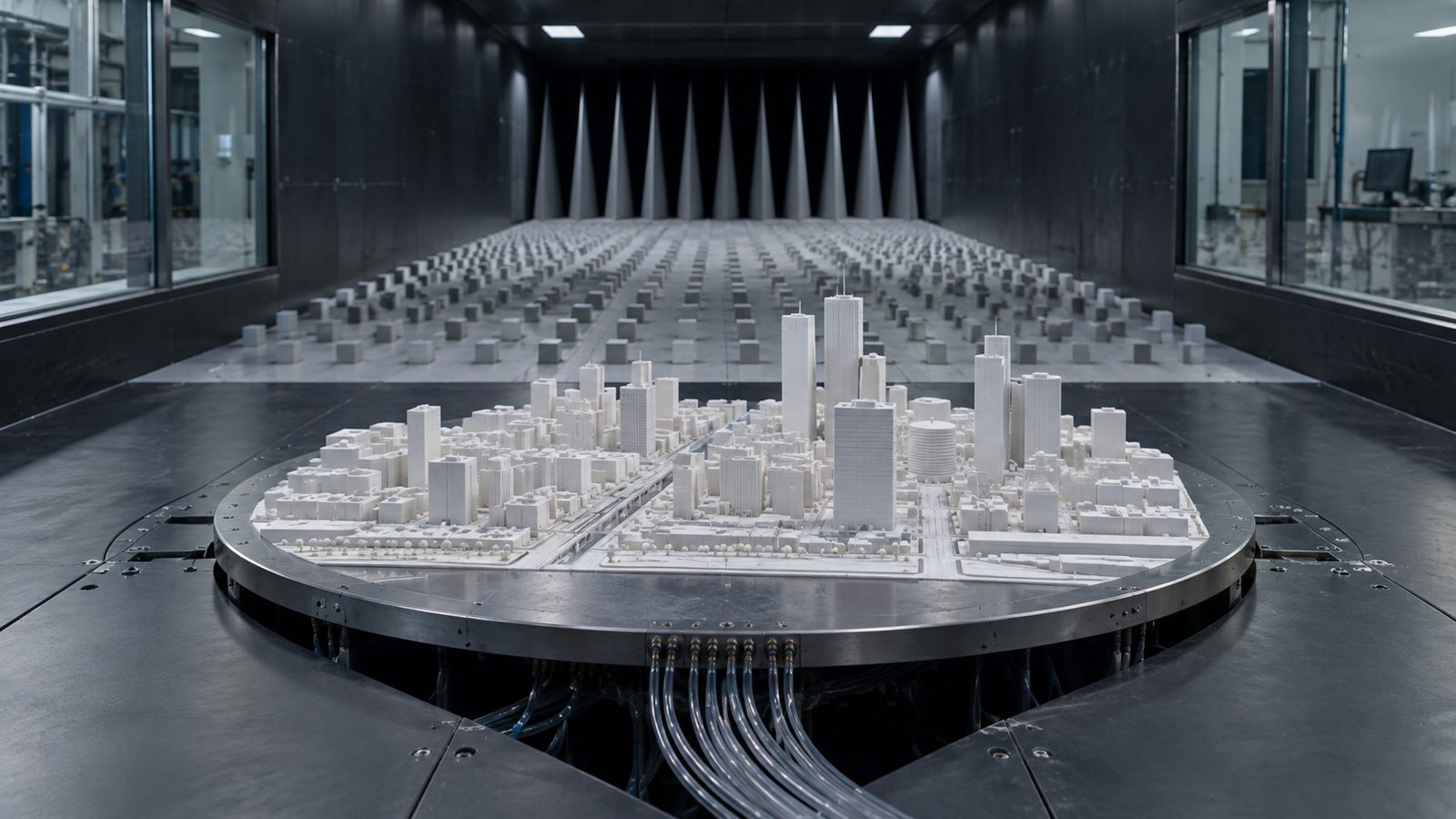
Wind tunnel testing may be needed for projects with geometries outside the scope of the codes, and for buildings that are tall or slender, whose dynamic behaviour matters, or that are strongly affected by their surroundings. Tests are used to determine main structural wind loads, local façade pressures, wind-induced structural response and wind conditions at pedestrian level. As a building becomes taller and more slender, crosswind vibration, torsion, vortex shedding and near-resonant dynamic effects can become significant. These behaviours cannot always be adequately represented by the static equivalent loads given in the codes.
During a test, a scale model of the building and its immediate surroundings is placed in a wind tunnel configured to represent the atmospheric boundary layer. For façade loads, a large number of pressure taps are installed on the model to measure simultaneous pressure fluctuations for different wind directions. Overall structural loads can be investigated with force balances or high-frequency pressure measurements, and structural motion and accelerations with aeroelastic models. Pedestrian comfort tests use a large number of velocity measurement points close to the ground. Model scale, blockage ratio, the extent of the surrounding buildings, the wind profile and turbulence characteristics must be set carefully by specialists, as they determine how representative the results are.
Related insights
See all
What Is Wind Load?
The pressures and suctions wind creates on building surfaces, and the difference between main structural loads and local façade pressures.

Wind Load Calculation to ASCE 7 and EN 1991-1-4
Code-based wind load calculation: the MWFRS and C&C distinction, EN 1991-1-4 parameters, and where code coefficients fall short.
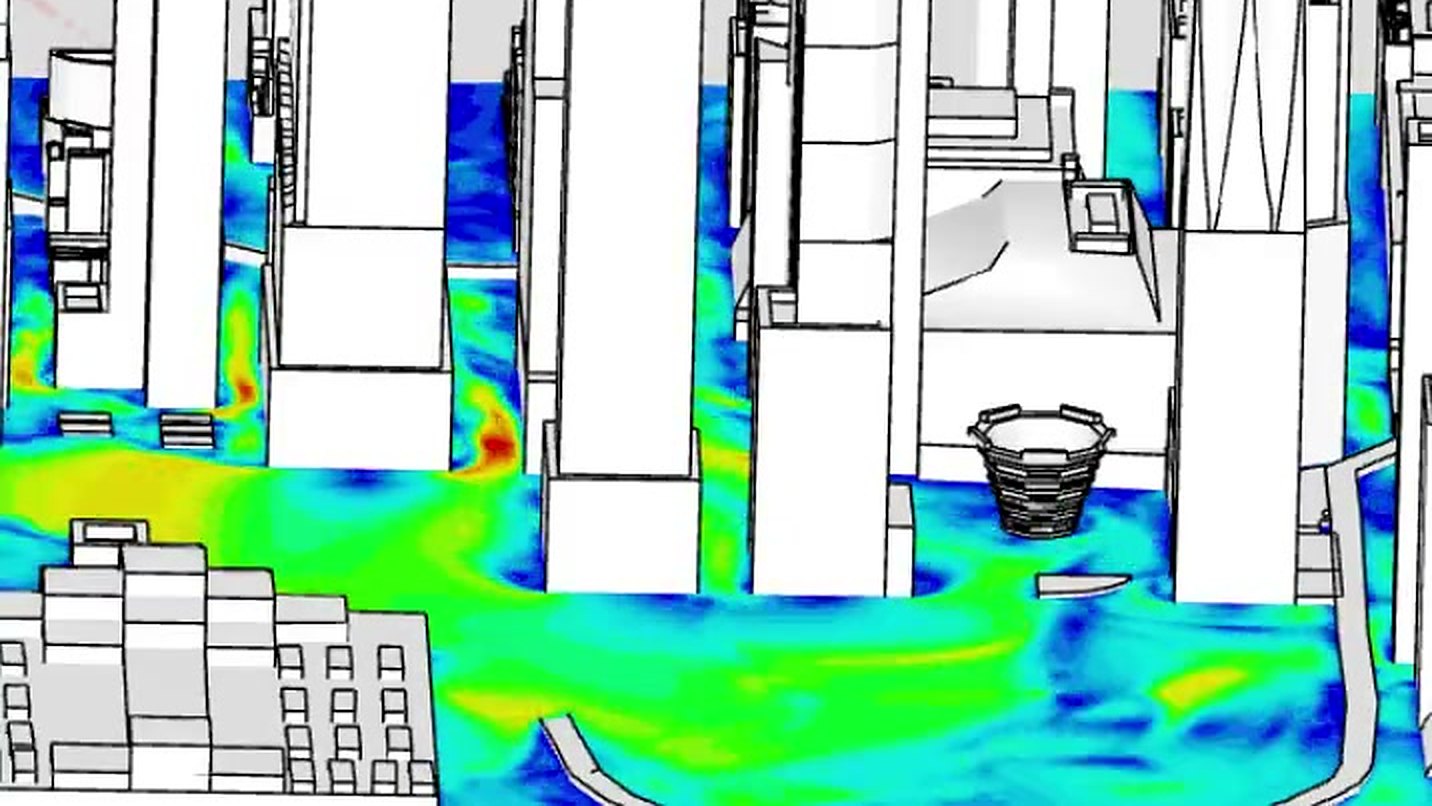
When Should CFD Wind Analysis Be Used?
Where CFD outperforms code tables, how it supports pedestrian comfort studies, and what determines whether its results can be trusted.