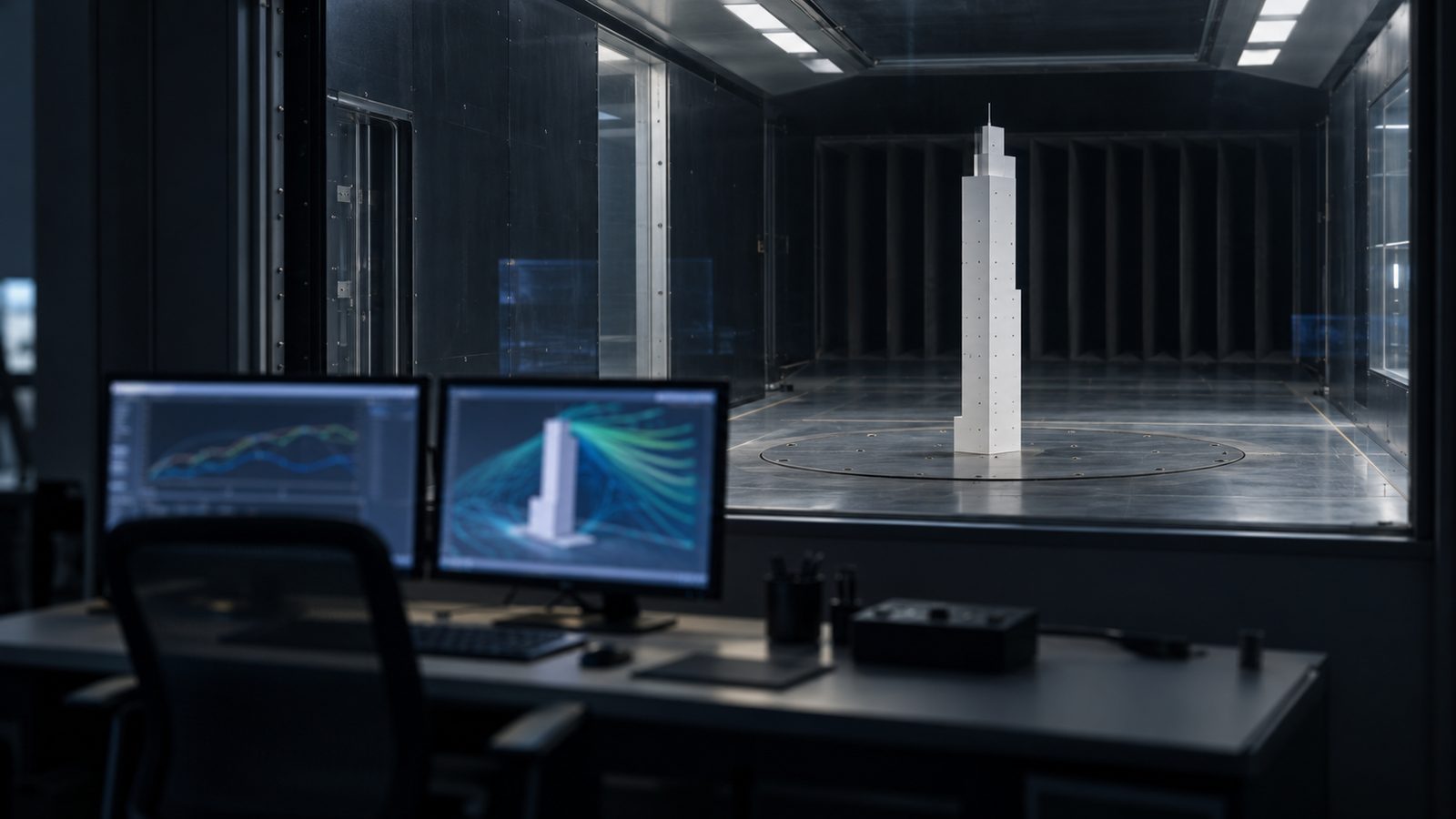
When comparing CFD and wind tunnel results, it must first be confirmed that both methods represent the same physical problem. Geometry, the extent of the surrounding buildings, reference height, mean velocity profile, turbulence intensity, surface roughness, wind directions and any time or spatial averaging of the results all need to be consistent. A point measurement in the wind tunnel should not be compared directly with the value of a large CFD cell, nor a peak pressure with a time-averaged RANS result. The first step is to ensure the quantities being compared share the same definition, whether mean speed, gust-equivalent speed, pressure coefficient, speed-up ratio or probability of exceedance.
Current academic practice treats CFD and wind tunnel testing as complementary rather than as alternatives. The wind tunnel provides controlled experimental data and time-dependent pressure measurements, while CFD makes it possible to examine the three-dimensional structure of the flow field in detail and to compare a large number of design options.
Related insights
See all
What Is Wind Load?
The pressures and suctions wind creates on building surfaces, and the difference between main structural loads and local façade pressures.

Wind Load Calculation to ASCE 7 and EN 1991-1-4
Code-based wind load calculation: the MWFRS and C&C distinction, EN 1991-1-4 parameters, and where code coefficients fall short.
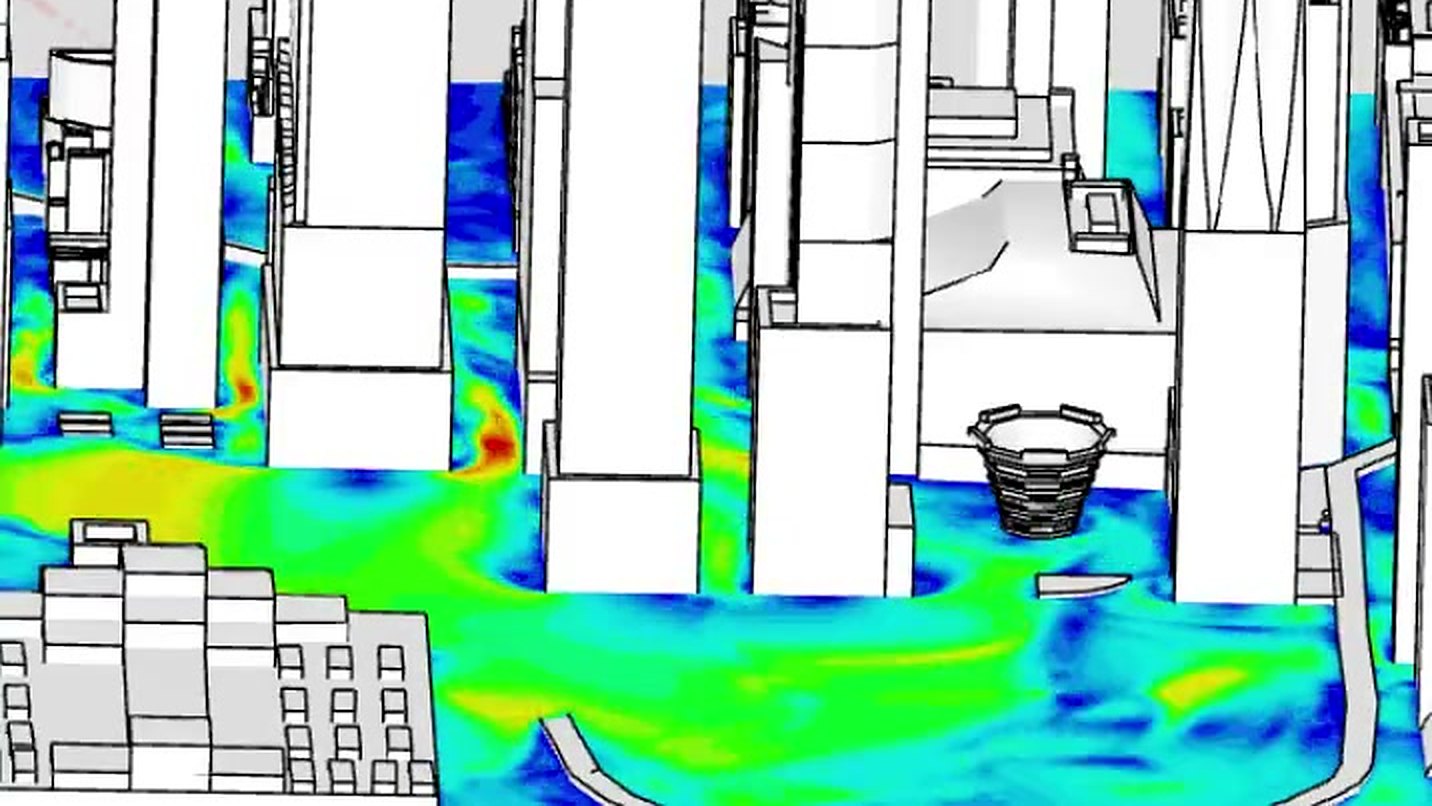
When Should CFD Wind Analysis Be Used?
Where CFD outperforms code tables, how it supports pedestrian comfort studies, and what determines whether its results can be trusted.