Seismic Engineering
What Is Risky-Building Determination and How Is It Carried Out?
1 min read

Risky-building determination is the process of establishing whether an existing building is risky within the scope of Law No. 6306 and its associated technical principles. The work is carried out within authorised institutions or organisations, by civil engineers who meet the required conditions. The building's structural system is examined in place, the necessary measurements are taken and material properties are investigated. In reinforced concrete structures this includes taking core samples, scanning reinforcement with non-destructive devices, and removing cover concrete in selected areas to examine reinforcement details. This work produces the as-built information to be used in the calculations.
The information gathered on site and the laboratory test results are used in a calculation model prepared in the office. Following the checks carried out according to the relevant technical principles, it is reported whether the building falls within the scope of a risky building. The determination therefore does not rest on visual inspection alone or on a single concrete test; it requires site investigation and engineering calculation to be assessed together. The outcome of this work does not carry the same meaning as a detailed seismic performance assessment under TBDY. Moreover, since a determination carried out formally under Law 6306 has administrative and legal consequences, the scope of the investigation and the process that follows should be understood before applying.
Related insights
See all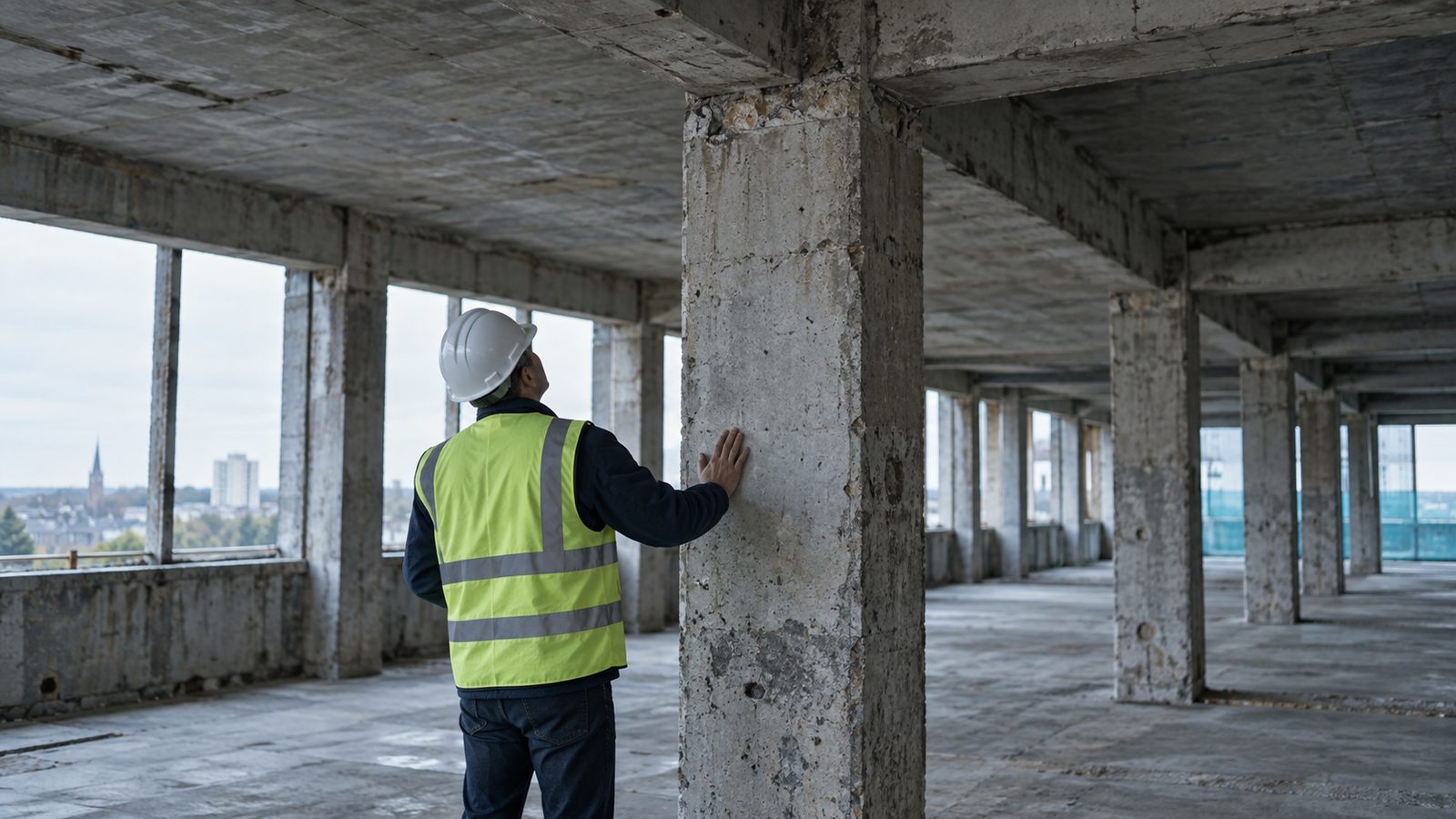
How Is the Seismic Risk of an Existing Building Assessed?
Rapid screening, statutory risk determination and code performance assessment: what each covers and why one does not replace another.
What Are the Performance Objectives in the Building Earthquake Code?
What Immediate Occupancy, Limited Damage, Controlled Damage and Collapse Prevention mean, and what meeting or missing a target actually implies.

What Is the Difference Between ASCE 41 Tier 1, Tier 2 and Tier 3?
The three-tier structure of ASCE 41, how it relates to the Turkish code, and how the appropriate tier is chosen for a given building.