Seismic Engineering
How Is the Seismic Risk of an Existing Building Assessed?
1 min read
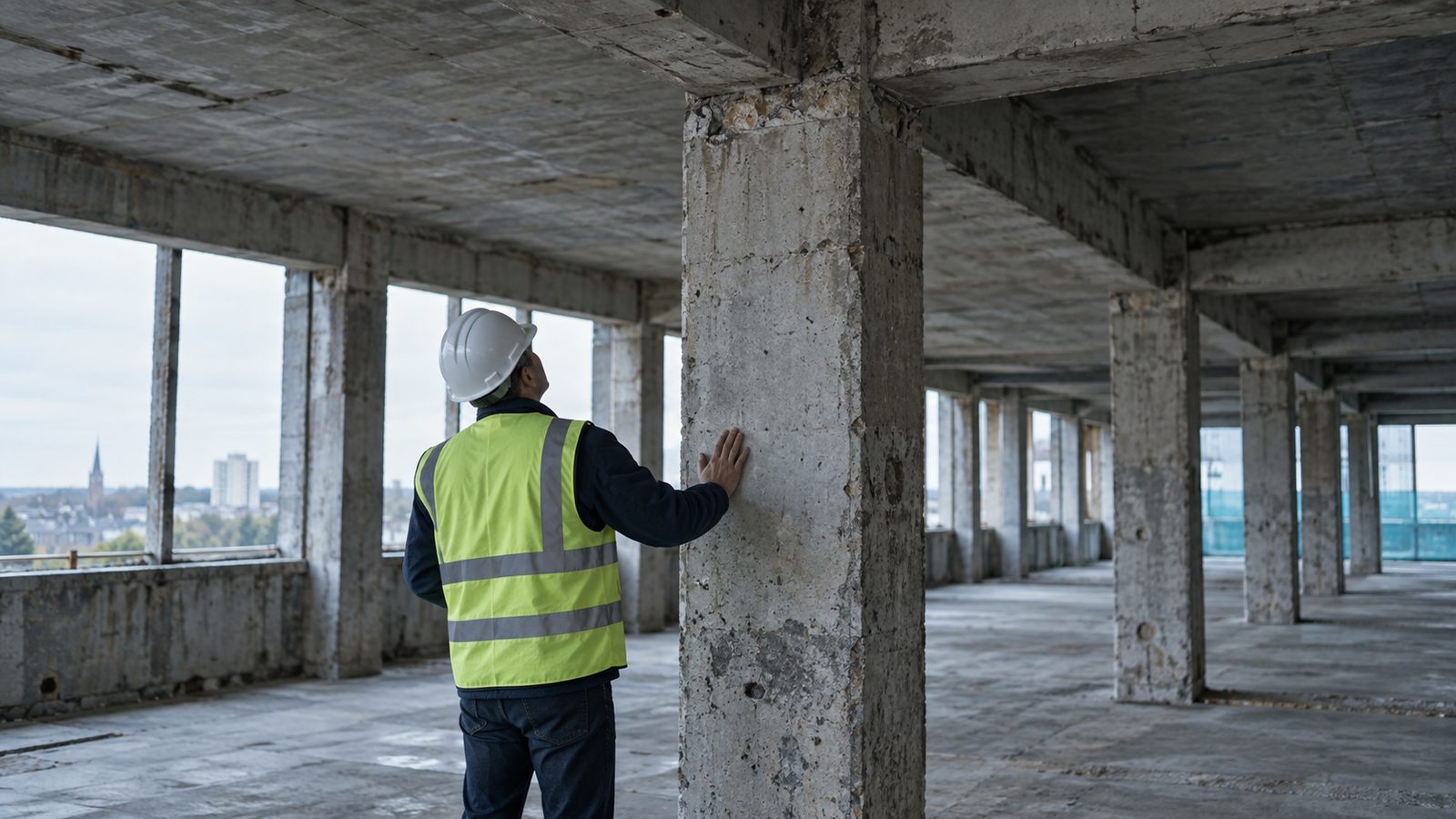
Different levels of approach can be used to learn about the seismic risk of an existing building. The first is rapid assessment. In these methods, a limited amount of measurement and structural information is collected from the building's critical storey, usually the ground floor. The approximate capacity of that storey is compared with the seismic demand of the region to assign the building a risk class. The aim is to obtain preliminary information quickly and at low cost, and to establish an inspection priority among a large number of buildings. The second approach is statutory risky-building determination. Following site investigations, material testing and calculations, it is established whether the structure is “risky” according to the relevant principles. This work does not describe the building's seismic performance in detail.
The third approach is assessment of seismic performance according to the Turkish Building Earthquake Code. Covering the building as a whole, this study includes a survey of the structural system; concrete, reinforcement, foundation and soil information is investigated, and it is checked whether the target performance is achieved using an analysis method suited to the structure. Rapid assessment methods are not equivalent to this detailed work, but they are practically useful for grading risk. Since not every building that fails the code's performance conditions is expected to collapse completely in an earthquake, it matters to see the differences in risk between buildings. A decision to strengthen or rebuild can only be taken after a detailed performance assessment and an estimate of strengthening cost, considering the conditions particular to the structure.
Related insights
See all
What Are the Performance Objectives in the Building Earthquake Code?
What Immediate Occupancy, Limited Damage, Controlled Damage and Collapse Prevention mean, and what meeting or missing a target actually implies.

What Is the Difference Between ASCE 41 Tier 1, Tier 2 and Tier 3?
The three-tier structure of ASCE 41, how it relates to the Turkish code, and how the appropriate tier is chosen for a given building.

What Is Risky-Building Determination and How Is It Carried Out?
How determination under Law No. 6306 is carried out, what site work it involves, and how it differs from a detailed performance assessment.