Seismic Engineering
How is an existing building assessed against the current seismic code?
5 min read · 29 July 2026

Assessing an existing building differs from designing a new one: here the engineer is not the one making decisions but the one reading decisions already made. There is no menu of choices in front of you — there is a building standing up, and you have to work out why it was built the way it was.
First, what is the structure really?
The process begins with material investigation. Concrete strength, reinforcement layout and detailing are established on site — because what the drawings show and what exists are often not the same. That gap widens as a building ages.
The Faculty of Architecture building of Mimar Sinan Fine Arts University was an extreme case. It was built between 1856 and 1859 as the Cemile Sultan Palace; its original load-bearing system is masonry, with reinforced concrete elements integrated in later periods. In such a building the 'structural system' is not one thing but the sum of several decisions stacked on top of each other.
Codes can change while you are still building
That was the reason for the assessment on Blocks A and B of Yenitepe Kadıköy. The blocks comprise 6 basement floors, a ground floor and 24 typical floors; the structure is reinforced concrete, with shear walls arranged in a triangular core following the building geometry. During construction, the seismic code was updated.
That meant the design and the final production of the blocks had to be reassessed against the latest code. Carried out per the current versions of ASCE 41 and the Turkish Seismic Code, the assessment showed the structure sits comfortably within the intended safety limits. A result like that is only useful if the assessment happens on time; the same finding after completion carries a very different cost.
One building, or a portfolio?
When the question moves from a single building to an asset portfolio, the method changes with it. Across a nationwide retail portfolio we performed ASCE 41-17 Tier 1 evaluations and visual structural assessments. The real contribution was not the individual reports but the fact that all of them came out of the same framework: different buildings in different cities can only be ranked once they are comparable.
The output of such work is not only an engineering report but screening checklists, documented observations and a ranking of engineering priorities — in other words, a document that tells you where next year's budget should go.
The primary structure is not the whole story
At the Geberit Headquarters building we reviewed floor vibration behaviour alongside the primary structural system, and flagged where additional structural information could sharpen the evaluation. Seismic safety is not only a collapse question; whether the building remains usable after an earthquake is a performance target too.
At the H&M logistics facility in the Czech Republic the question was different again: automated material handling systems installed on steel mezzanines generate their own forces during an earthquake. We modelled the interaction between equipment, mezzanine and primary building structure to Eurocode 8, building advanced finite element models for both the equipment and the supporting steelwork. Adding a new source of load to an existing structure means reassessing that structure.
Against which code?
This question matters more than it looks. At Çeşme Marinera we assessed the entire structural framing system and the related shop drawings against the Turkish Seismic Code valid at the time, with the relevant Turkish Standards, Eurocodes and American codes (ACI 318M-14, ACI 435R-95) also brought into the assessment. At Nuhoğlu CUBES the review was completed directly against American codes.
The choice of code is a contractual decision as much as a technical one, and it changes the answer. Which framework governs should be written down before the assessment starts.
The outcome is not a grade
The structure is modelled and assessed against a target performance level. The output is not a score or a pass/fail; it is a set of decisions: which elements are adequate, which need intervention, at what scale, and in what order. A good assessment report does not leave its reader unsure what to do next.
Related insights
See all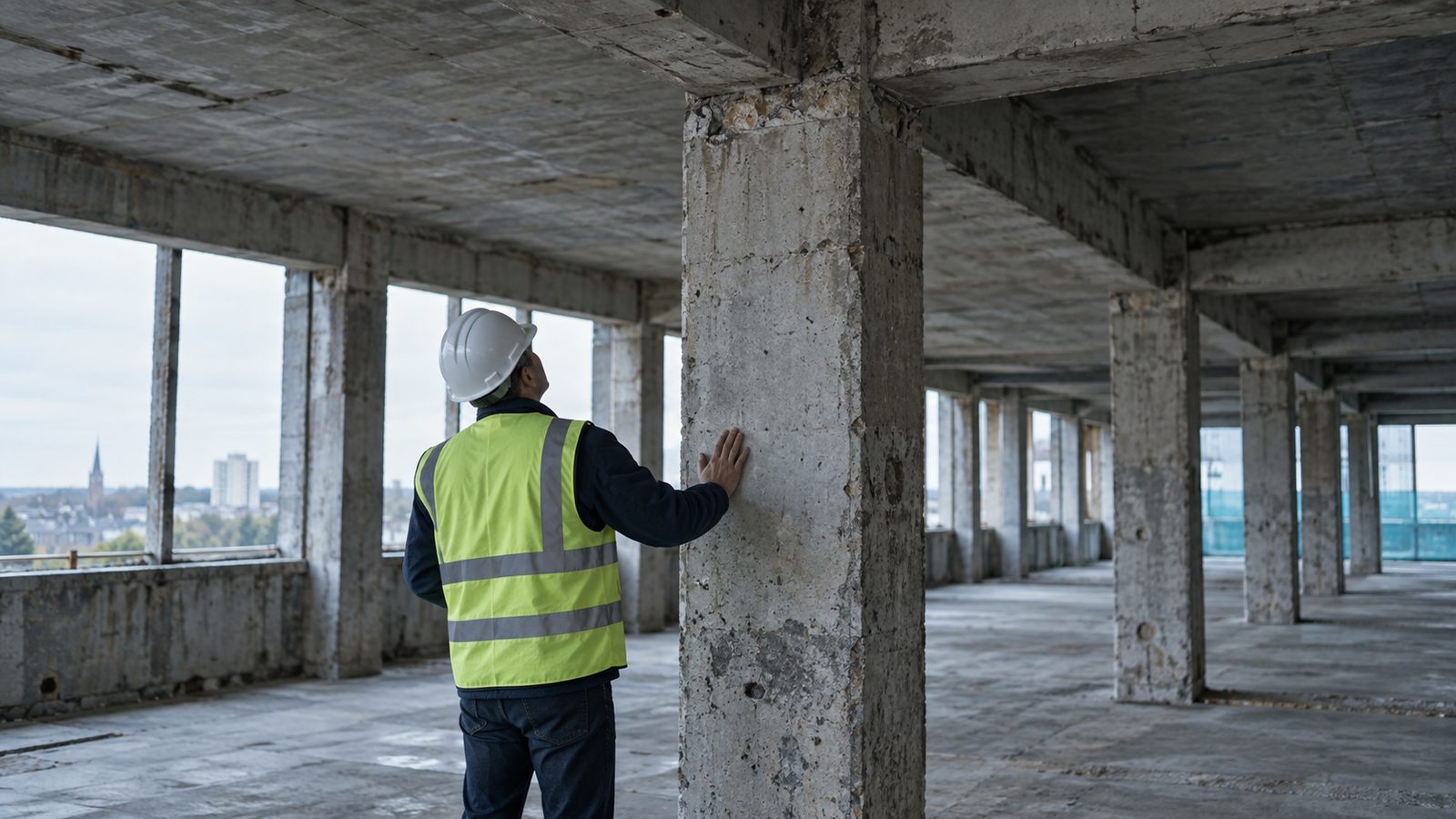
How Is the Seismic Risk of an Existing Building Assessed?
Rapid screening, statutory risk determination and code performance assessment: what each covers and why one does not replace another.
What Are the Performance Objectives in the Building Earthquake Code?
What Immediate Occupancy, Limited Damage, Controlled Damage and Collapse Prevention mean, and what meeting or missing a target actually implies.

What Is the Difference Between ASCE 41 Tier 1, Tier 2 and Tier 3?
The three-tier structure of ASCE 41, how it relates to the Turkish code, and how the appropriate tier is chosen for a given building.