Seismic Engineering
Strengthening Methods: Jacketing, FRP, Steel Frames and Added Shear Walls
1 min read
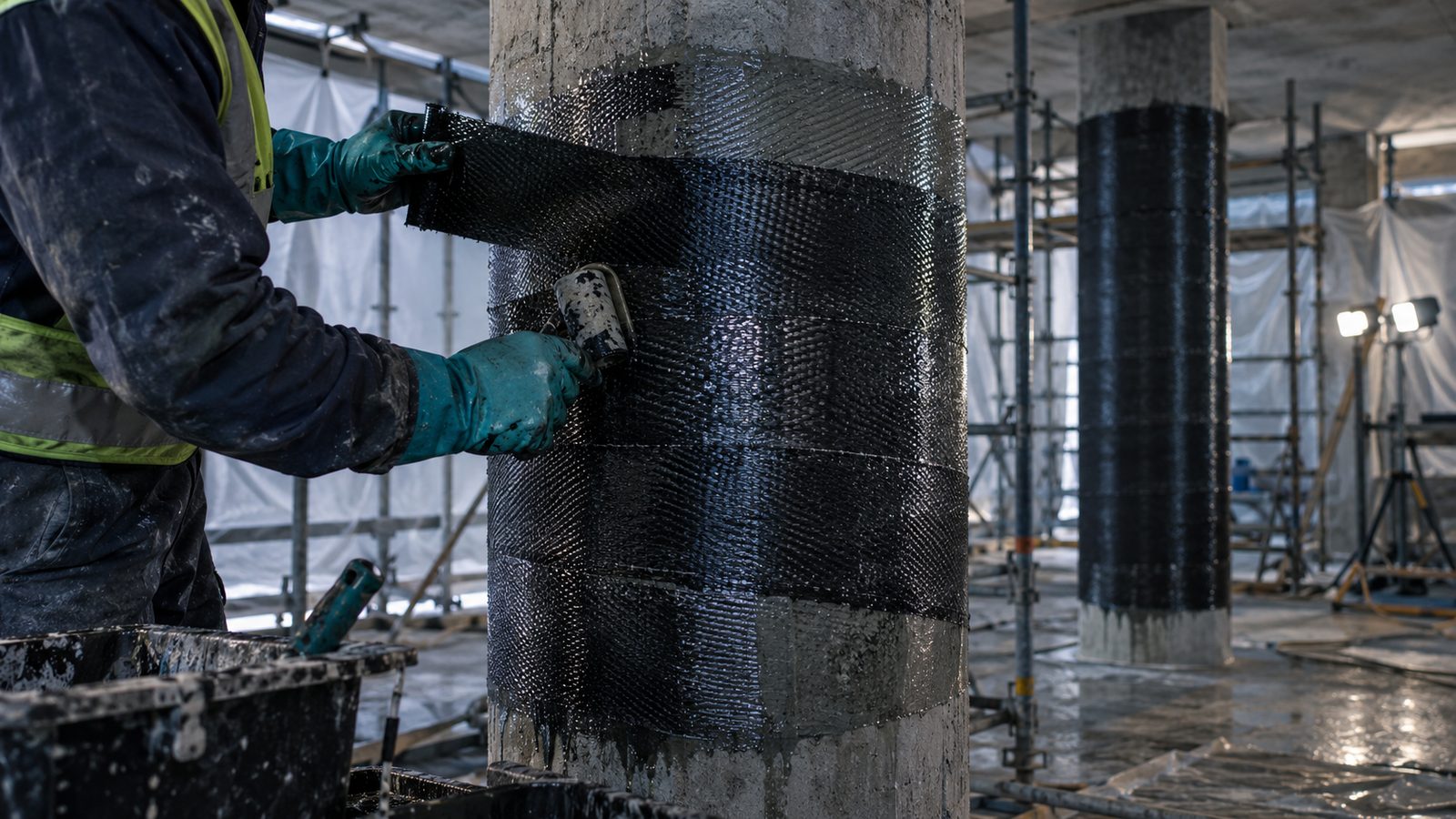
Different methods can be used in building strengthening, including reinforced concrete jacketing, FRP applications using fibre reinforced polymer materials, the addition of steel frames or braces, and the addition of reinforced concrete shear walls. Jacketing is applied to improve the section and capacity of structural elements. Depending on the design, FRP can contribute to increasing the confinement, shear or flexural capacity of elements. Steel systems and reinforced concrete shear walls can improve the building's capacity to resist lateral earthquake actions and its stiffness. Which method is used is determined by a specialist engineer according to the current condition and needs of the building. The essential issue is correct identification of the deficiencies in the structure and selection of the interventions that will address them.
The success of a strengthening project is decided by correct execution of the prepared solution on site. It is therefore of great importance that the specialist engineer who prepared the design supervises the work at critical stages. Details such as reinforcement placement, anchors, the connections between existing and new elements, surface preparation, concrete work and the conditions for FRP bonding directly affect whether the strengthening performs as expected. Where a situation different from the design is encountered on site, the change to be made must be assessed by the project engineer. Strengthening is not work that is completed by producing a calculation report and drawings; checking that the construction follows the design is a fundamental part of the process.
Related insights
See all
How Is the Seismic Risk of an Existing Building Assessed?
Rapid screening, statutory risk determination and code performance assessment: what each covers and why one does not replace another.
What Are the Performance Objectives in the Building Earthquake Code?
What Immediate Occupancy, Limited Damage, Controlled Damage and Collapse Prevention mean, and what meeting or missing a target actually implies.

What Is the Difference Between ASCE 41 Tier 1, Tier 2 and Tier 3?
The three-tier structure of ASCE 41, how it relates to the Turkish code, and how the appropriate tier is chosen for a given building.