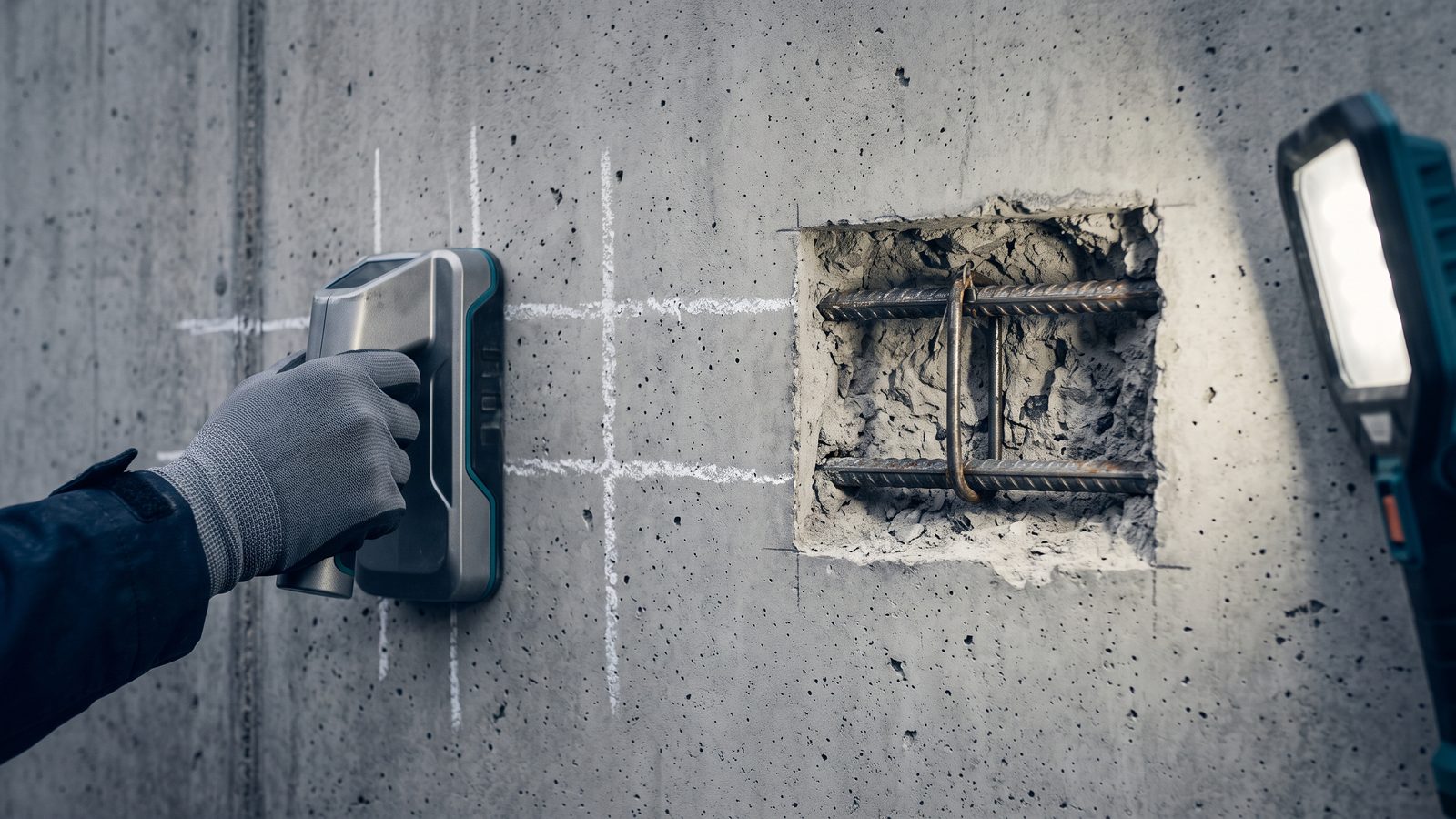
Reinforcement detection is the investigation of the position, spacing, quantity and detailing of the steel reinforcement inside concrete elements. Non-destructive devices such as cover meters and suitable radar systems can provide information about the layout of the reinforcement and the thickness of the cover concrete. Depending on the characteristics of the device and the measurement conditions, bar diameter may also be estimated. In densely reinforced zones, in multiple layers of reinforcement and at connections, however, the measurements become harder to interpret. Non-destructive scanning may therefore not, on its own, provide all the reinforcement information needed in a seismic performance calculation.
In a seismic performance assessment, the cover concrete must be removed in a controlled way in selected areas so that the necessary details can be verified. This exposes stirrup spacing, bar bending and hook details, internal stirrups and cross-ties for direct examination. The presence and arrangement of transverse reinforcement inside an element in particular cannot always be established reliably by scanning from the surface. The minimum number and distribution of such openings is determined by the provisions of the relevant code. Where the engineer finds differing practices or uncertainties in the structure, increasing the number of inspections allows the calculations to rest on more representative data.
Related insights
See all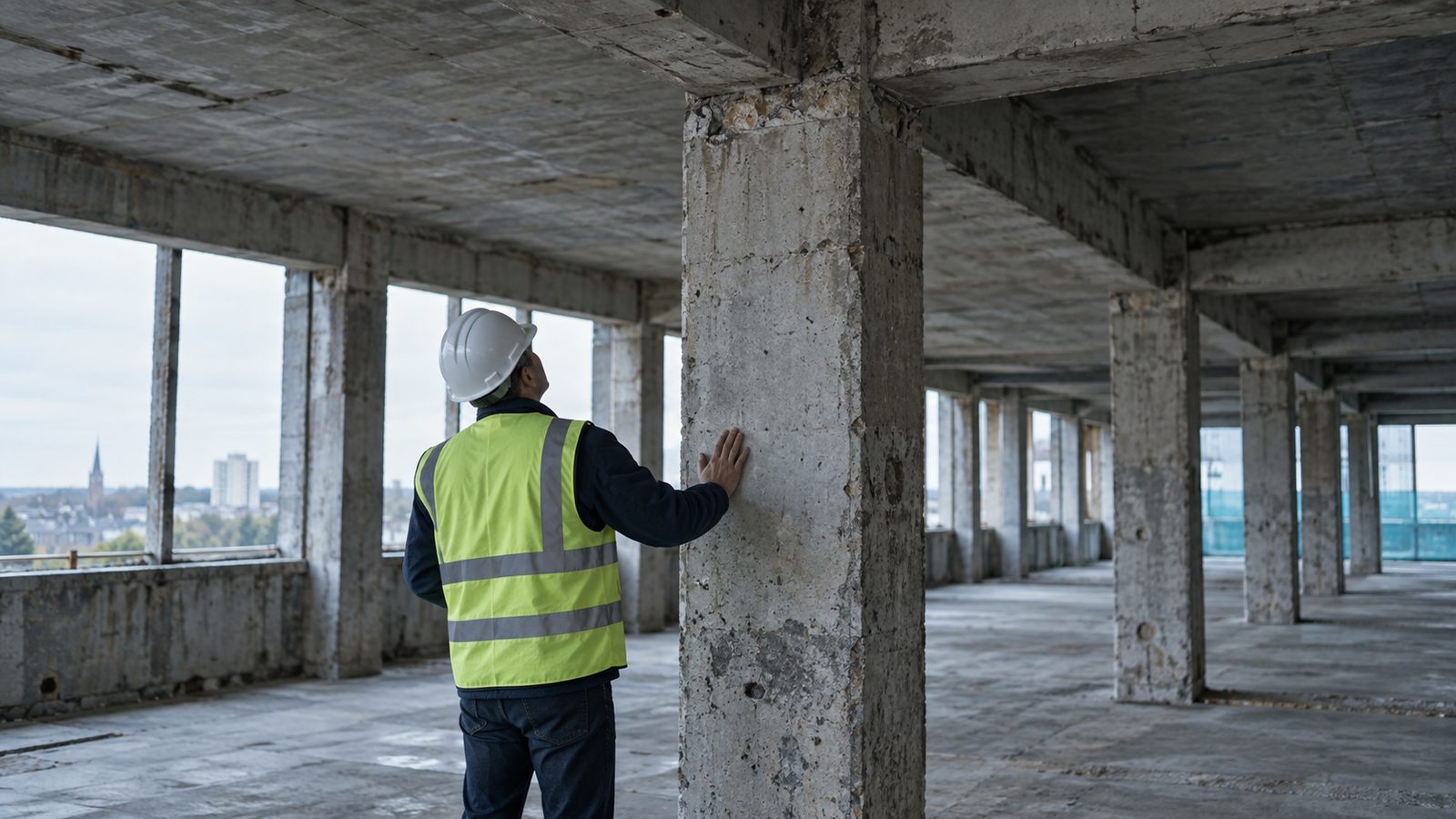
How Is the Seismic Risk of an Existing Building Assessed?
Rapid screening, statutory risk determination and code performance assessment: what each covers and why one does not replace another.
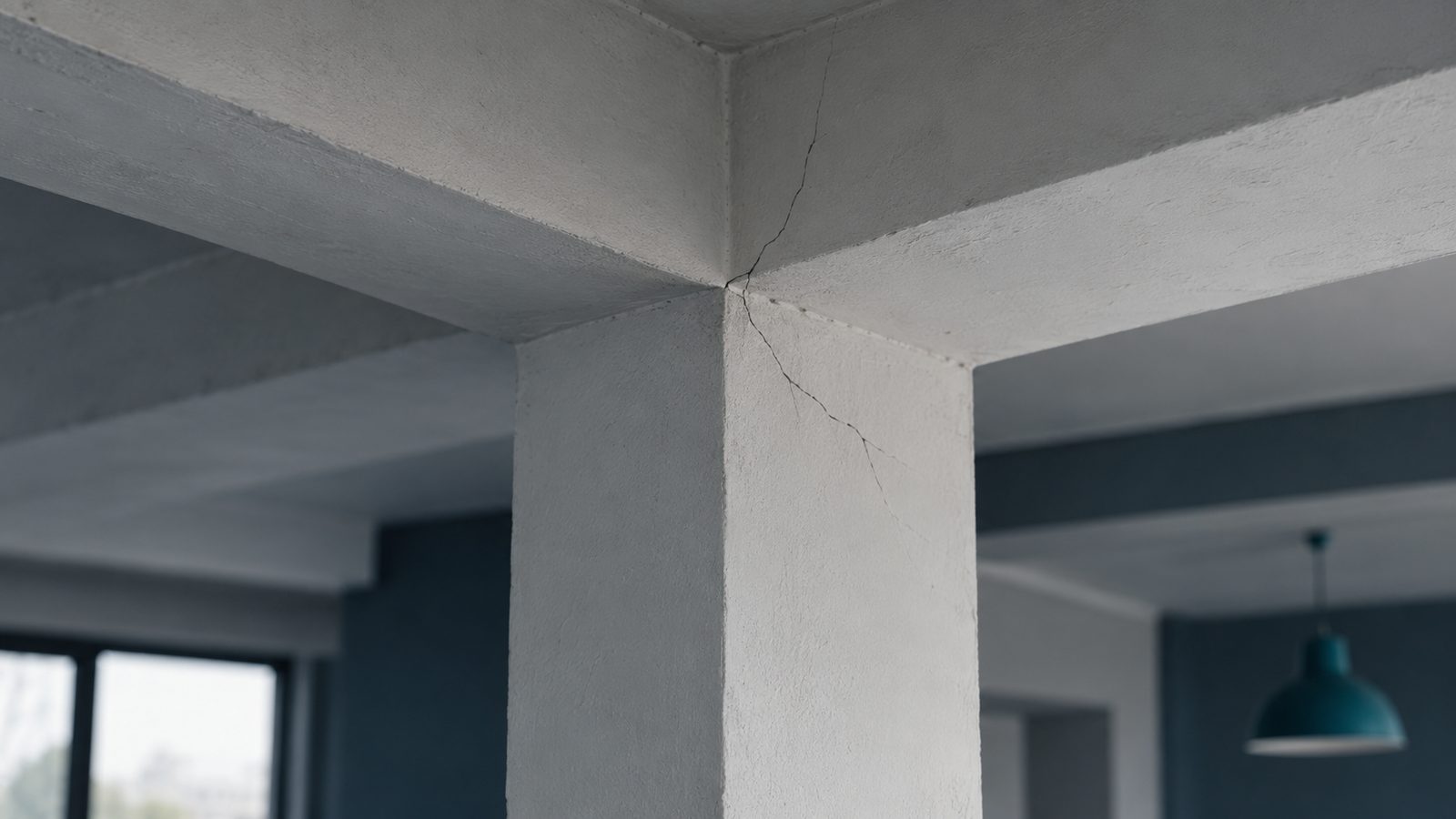
What Are the Performance Objectives in the Building Earthquake Code?
What Immediate Occupancy, Limited Damage, Controlled Damage and Collapse Prevention mean, and what meeting or missing a target actually implies.

What Is the Difference Between ASCE 41 Tier 1, Tier 2 and Tier 3?
The three-tier structure of ASCE 41, how it relates to the Turkish code, and how the appropriate tier is chosen for a given building.