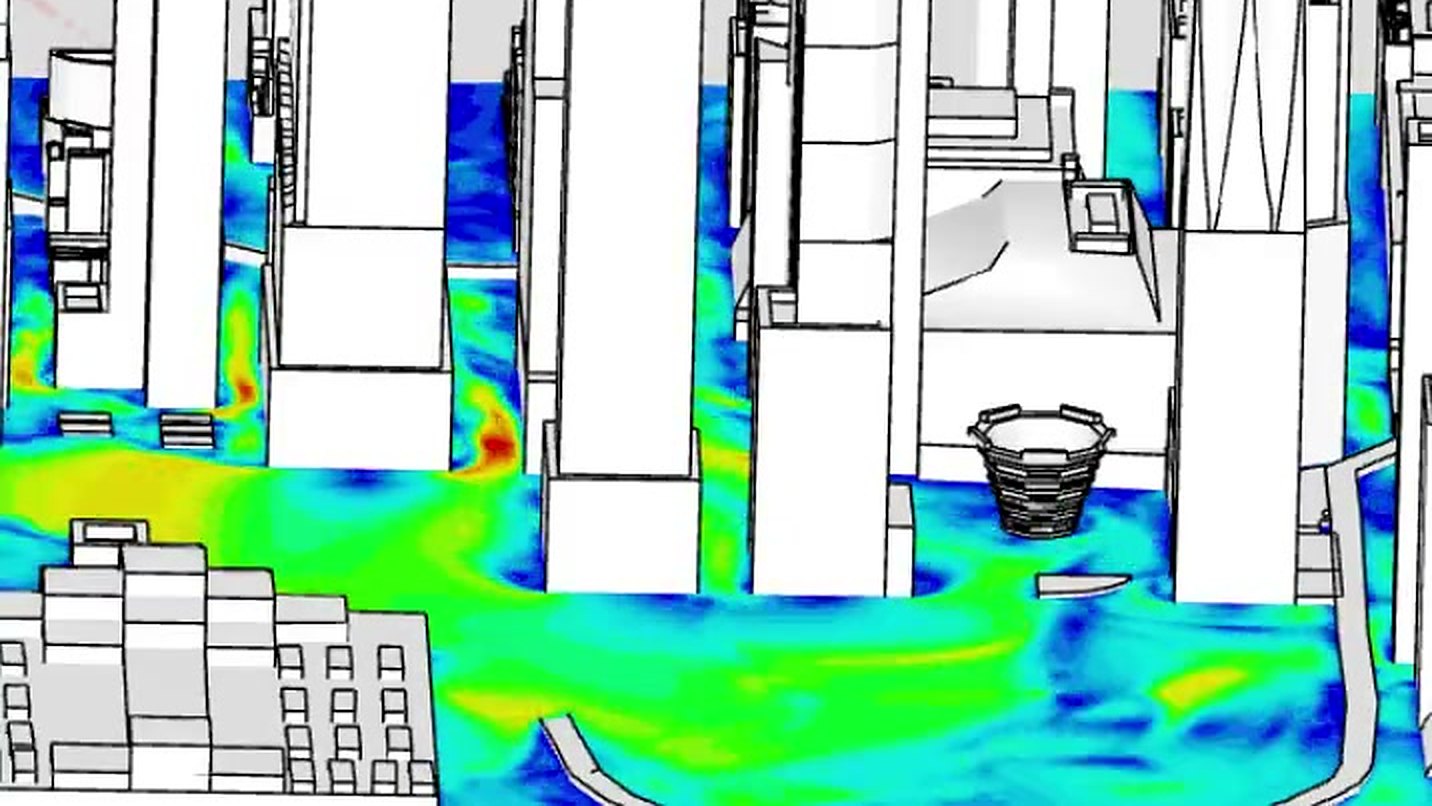
Computational Fluid Dynamics, or CFD, is an analysis method that numerically examines the three-dimensional movement of wind around a building and its surroundings. It offers a clear advantage where the building geometry, neighbouring structures or topography cannot be adequately represented by code tables. CFD can show in detail the accelerations between buildings, corner streams, downward flows, channelling in passages and arcades, recirculation zones and poorly ventilated areas. Alternative building orientations, massing arrangements, podiums, canopies, wind screens and landscape measures can be compared while the design is still being developed.
CFD is a particularly effective method for pedestrian wind comfort and safety studies, because it allows wind conditions at pedestrian level to be examined across the entire site rather than at only a few points. Speed-up factors calculated for different wind directions can be combined with long-term meteorological data to produce comfort maps for uses such as sitting, standing, strolling and business walking. The reliability of the results, however, depends on a correct definition of the atmospheric boundary layer, adequate modelling of the surrounding buildings, mesh resolution, the turbulence model and appropriate validation.
Related insights
See all
What Is Wind Load?
The pressures and suctions wind creates on building surfaces, and the difference between main structural loads and local façade pressures.

Wind Load Calculation to ASCE 7 and EN 1991-1-4
Code-based wind load calculation: the MWFRS and C&C distinction, EN 1991-1-4 parameters, and where code coefficients fall short.
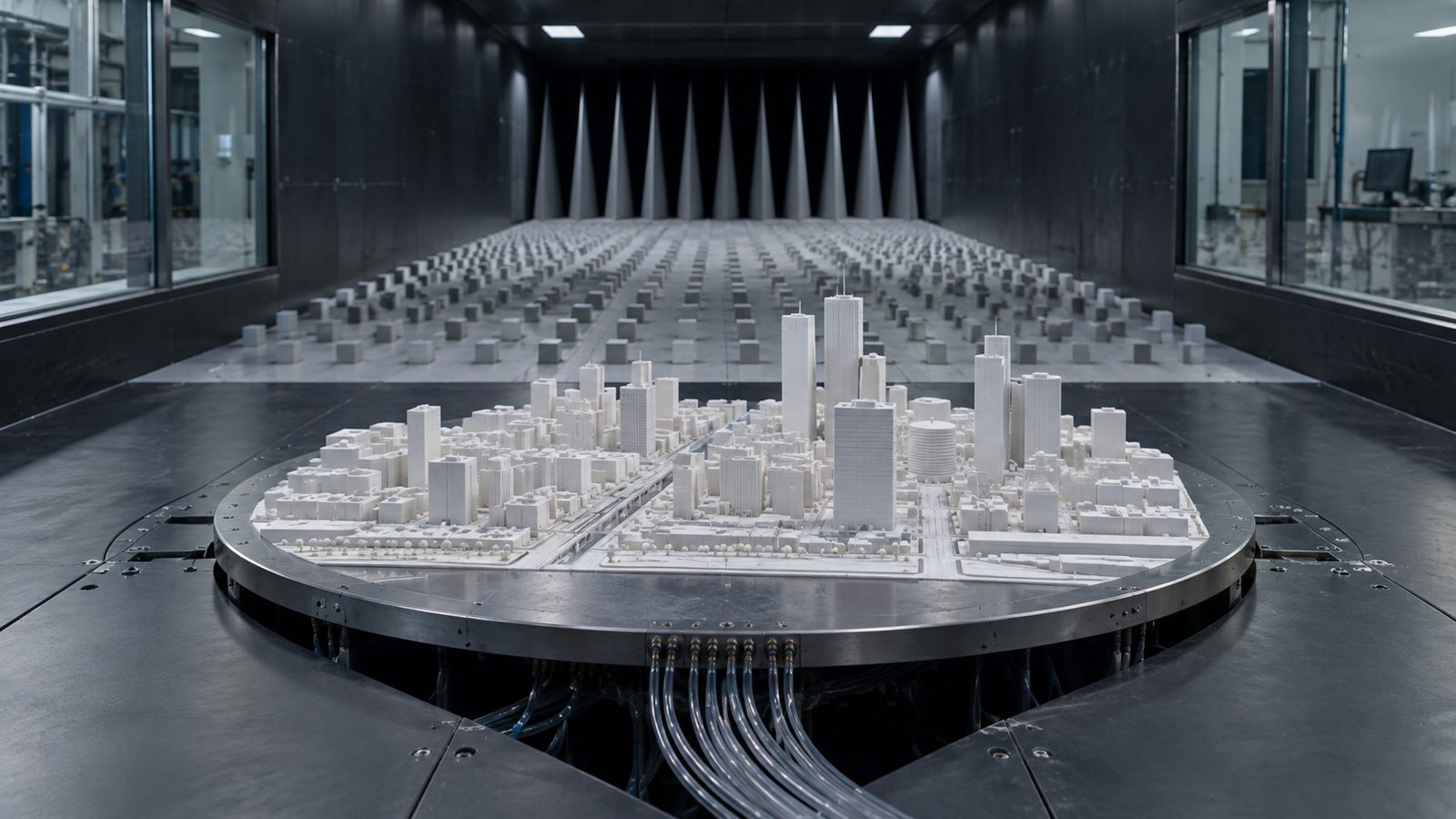
When Is Wind Tunnel Testing Required?
Which projects call for wind tunnel testing, and the measurement methods used for façade pressures, structural response and pedestrian comfort.