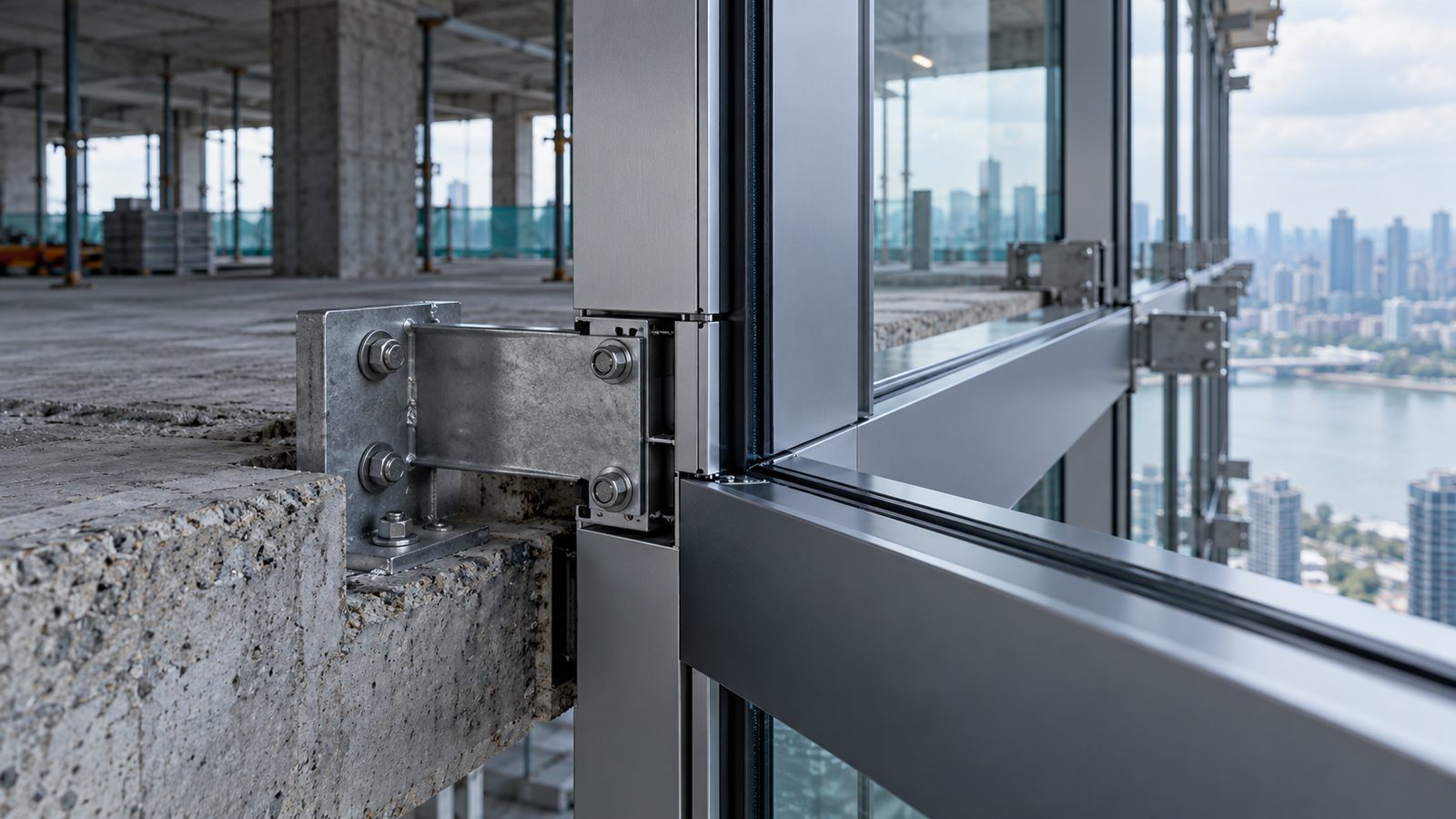
The first step in a curtain wall calculation is to establish how loads travel from the glass or cladding surface into the building's primary structure. The support conditions of the glass, the spans of the transoms and mullions, the position of profile splices and the directions in which the brackets carry load are all decided at this stage. Choosing fixed and sliding supports correctly allows the system both to carry load and to accommodate the movements expected of it. The calculation model must represent the real connection behaviour on site; assuming a connection to be fixed when it is expected to slide, or defining its rotational stiffness incorrectly, can produce a flawed design even when the element sizes look right.
In curtain walls the engineering difficulty often lies not in the calculations but, before them, in developing a suitable structural arrangement. Architectural expectations such as visible profile widths, glass modules, joint lines and concealed fixings directly constrain the structural options. Much like the AESS approach in architecturally exposed steelwork, the load-bearing details of a façade are also part of its visual quality. Thermal insulation, acoustic performance, drainage and access for installation are built into the same arrangement. Once the system is settled, the glass, profiles, screws, silicone joints, brackets and anchors are sized to the relevant design rules and turned into buildable details through strength and deflection checks.
Related insights
See all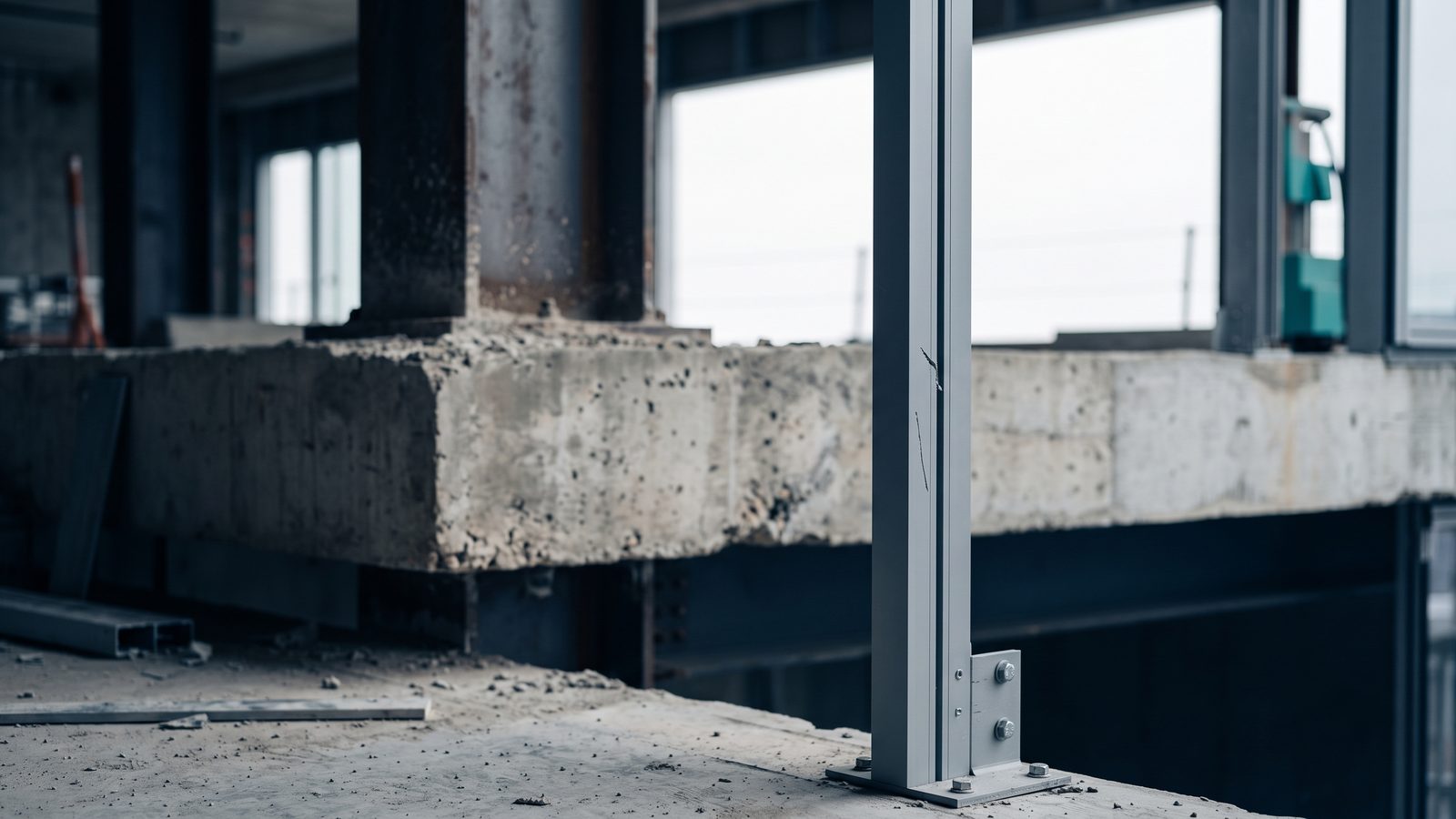
What Is Structural Façade Engineering and How Does It Differ from Structural Design?
How façade elements carry load, deflect and follow building movement, and how the discipline differs from primary structural design.
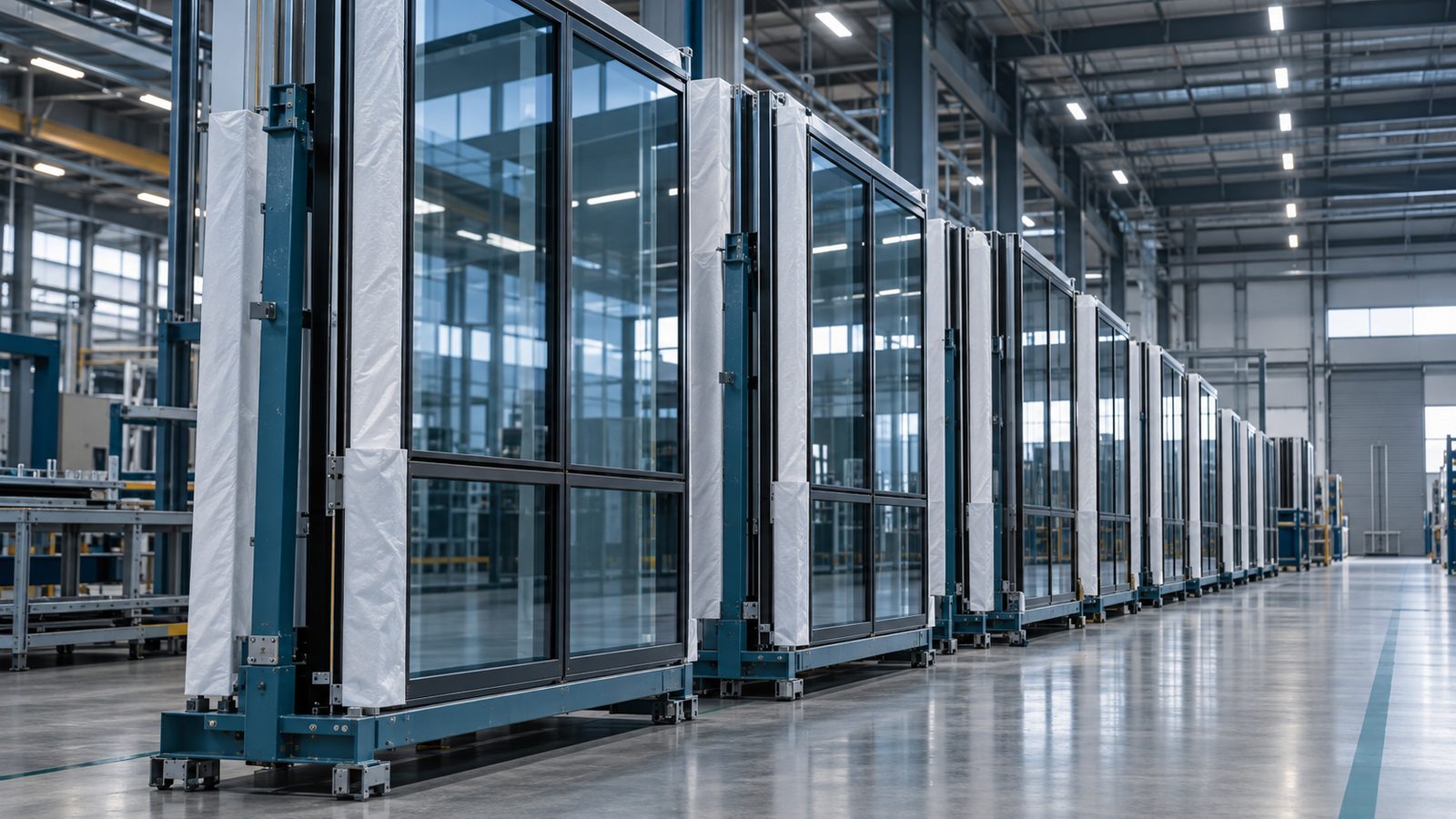
Curtain Wall Performance Classes to EN 13830
What EN 13830 actually classifies, how air, water and wind classes are expressed, and why a catalogue performance does not transfer automatically.
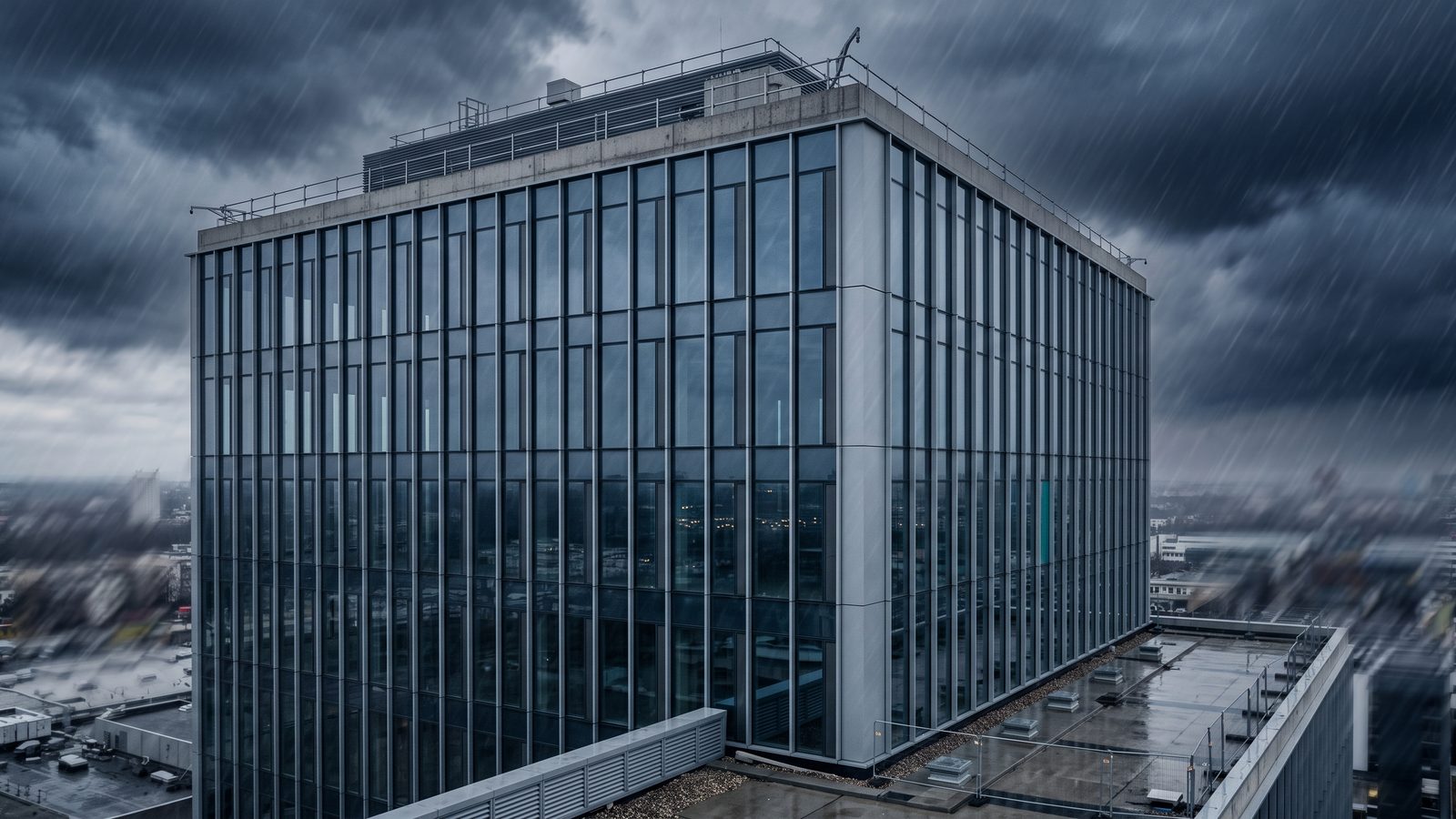
How Are Façade Wind Loads Determined?
Determining façade wind loads from the governing code, why internal pressure matters, and where corner zones and wind tunnel testing come in.