
EN 13830 is a product standard that defines the framework for assessing the performance of curtain wall systems. Rather than classifying a façade with a single pass mark, it allows different performance characteristics to be addressed through their own assessment methods. Air permeability, watertightness, resistance to wind load and thermal performance are the principal components of that assessment; other characteristics are examined according to the use and the conditions of the project. Describing a system merely as “compliant with EN 13830” therefore says nothing about its adequacy for a particular project. Which characteristics have been verified, at what level and for which system arrangement must also be stated.
For air permeability, classifications such as A1–A4 and AE for higher test pressures are encountered under EN 12152. For watertightness, classes R4–R7 and RE are used under EN 12154; R7, for example, corresponds to the relevant test condition at 600 Pa. For class RE the pressure reached is additionally stated. Wind performance is assessed through design and test pressures, deformations and the condition of the system after testing. The classes used on a project should be selected according to building height, location, exposure and use expectations, and reports should take account of the edition of the standard applied. A system's catalogue performance, moreover, does not transfer automatically to different glass sizes or modified joint details; the relationship between the test specimen and the project solution must be checked.
Related insights
See all
What Is Structural Façade Engineering and How Does It Differ from Structural Design?
How façade elements carry load, deflect and follow building movement, and how the discipline differs from primary structural design.
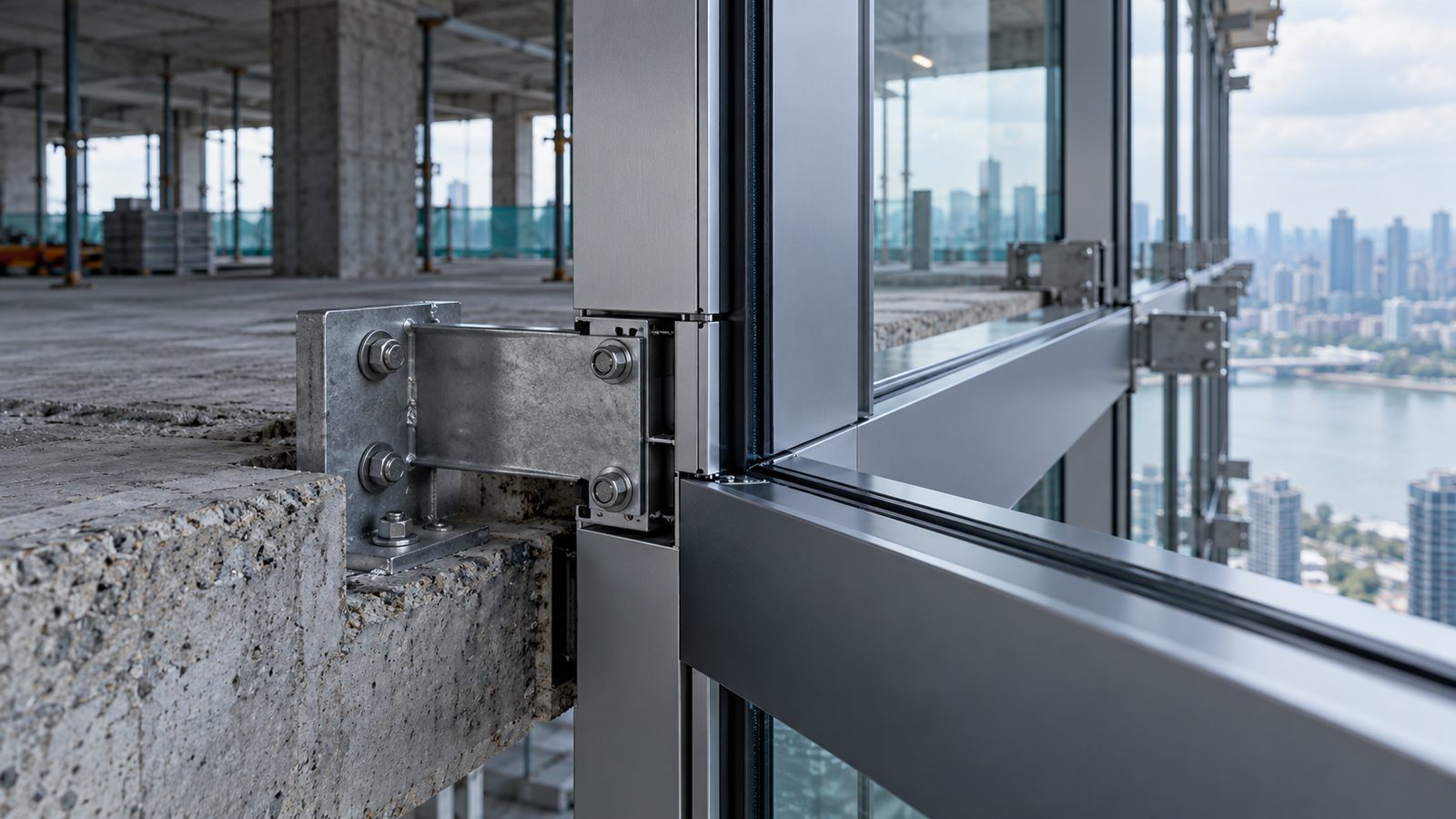
How Is a Curtain Wall Calculated Structurally?
Establishing the load path, choosing fixed and sliding supports, and turning architectural intent into a buildable structural arrangement.

How Are Façade Wind Loads Determined?
Determining façade wind loads from the governing code, why internal pressure matters, and where corner zones and wind tunnel testing come in.